Search RJ's Blog

Showing posts with label Men's Study. Show all posts

Friday, November 2, 2012

Men's Study @ Harvest - "The Beatitudes: Sermon On the Mount" (Part 2)

I have really been enjoying my opportunity to go to the men's study at Harvest. It was my goal to challenge myself in order to invest in my personal study of the gospels since I am not teaching a weekly Bible study or consistently teaching in other ministries for the moment.

This post will encompass "The Beatitudes" in the Sermon On the Mount. Jesus begins his inaugural kingdom address with "blessedness" for all who live in conformity to his new kingdom life. I hope you enjoy all of the OT references because they are fascinating and intriguing! I am looking forward to adding future posts on Matthew's gospel as I have been reading more information on how the OT is used specifically in Matthew.

Matthew 5 - OT In the Sermon On the Mount
1. 5:1, the first verse has great OT significance. Jesus "went up on a mountain" is a repetitive theme throughout Matthew's gospel (known as "Jesus on the mountain motif"), to show how Jesus is God's new prophet and lawgiver to all nations, just like Moses who was the prophet and lawgiver of  the nation of Israel (cf. Matt. 4:8, 5:1, 8:1, 14:23, 15:29, 17:1, 17:9, 21:21, 28:26). It is very possible Matthew is implying direct allusions to the giving of the law through Moses on Mount Sinai. His audience would of absolutely visualized the biblical connection since they were the "the multitude" who was "taught" instruction as Israel was in Exodus. All of these OT references establish the purpose of the sermon. The purpose is to transcend the Mosaic covenant and establish a new law Jesus came to fulfill.

A. The first allusion is when Israel gathered around Mount Sinai while Moses went up on the mountain in Exodus 19:2-6, "They set out from Rephidim and came into the wilderness of Sinai, and they encamped in the wilderness. There Israel encamped before the mountain [like the multitudes], while Moses went up to God [like Jesus went up to the mountain]. The LORD called to him out of the mountain, saying, “Thus you shall say to the house of Jacob, and tell the people of Israel [like Jesus did]: You yourselves have seen what I did to the Egyptians, and how I bore you on eagles' wings and brought you to myself. Now therefore, if you will indeed obey my voice and keep my covenant, you shall be my treasured possession among all peoples, for all the earth is mine; and you shall be to me a kingdom [those who do the beatitudes] of priests and a holy nation. These are the words that you shall speak to the people of Israel.” And more explicitly in Exodus 24:12, "The LORD said to Moses, “Come up to me on the mountain and wait there, that I may give you the tablets of stone, with the law and the commandment, which I have written for their instruction."

B. Second, the remembrance of the Mount Sinai account in Deuteronomy 5:4-5, "The LORD spoke with you face to face at the mountain [like Jesus did], out of the midst of the fire, while I stood between the LORD and you at that time, to declare to you the word of the LORD [like Jesus taught]..."

C. Third, the repeated theme by the prophet Isaiah who said from a mountain God will teach the multitudes his word in Isaiah 2:2-3, "It shall come to pass in the latter days that the mountain of the house of the LORD shall be established as the highest of the mountains, and shall be lifted up above the hills; and all the nations shall flow to it, and many peoples [like the multitudes] shall come, and say: “Come, let us go up to the mountain of the LORD, to the house of the God of Jacob, that he may teach us his ways and that we may walk in his paths [the purpose of the sermon].” For out of Zion shall go the law, and the word of the LORD [like Jesus taught] from Jerusalem."


The Beatitudes
A. 5:3, the beginning of the "blessed" statements known as the beatitudes (cf. 5:3, 4, 5, 6, 7, 8, 9, 10, 11). The "blessed" usage was common in Jewish literature as a way of expressing happiness. "Blessed" allusions can be established as a reminder of righteous living in the kingdom of God as noted throughout the writings of the psalms, "Blessed is the man" (cf. Ps. 1:1, 32:1-2, 33:12, 34:8, 40:4, 41:1, 65:4, 84:12, 94:12, 112:1, 127:5, 128:1, 146:5).

B. 5:4, he "poor in spirit" is most likely a condition the materially impoverished faced. They were worthlessly and hopelessly in need, trusting God for everything in spiritual and social matters. The first two beatitudes promise those who are poor in spirit will "be comforted." This is most likely a fulfillment by the Spirit-anointed servant in parts of Isaiah 61:1-2, "The Spirit of the Lord GOD is upon me, because the LORD has anointed me to bring good news to the poor...to comfort all who mourn..." (Actually, there is a messianic structure or formula in Matthew's gospel that flows exactly with the LXX Greek usage to showcase the inaugural coming kingdom of Christ. See the chart from Michael P. Knowles in "Hearting the Old Testament In the New Testament," p.67)

Sermon On the Mount
The Year of the Lord’s Favor
Matthew 5:1-12
Isaiah 61:1-10
v.3 “Blessed are the poor in spirit, for theirs is the kingdom of heaven...”
v.1 “The spirit of the Lord is upon me, because he has anointed me to proclaim good news to the poor…”
v.4 “Blessed are those who mourn, for they will be comforted…”
v.2 “…to comfort all who mourn…”
v.5 “Blessed are the meek, for they will inherit the earth…”
v.7 “…they shall inherit the earth…”
v.6 “Blessed are those who hunger and thirst for righteousness, for they will be filled…”
v.3 “…they shall be called generations of righteousness…”
v.7 “Blessed are the merciful, for they will receive mercy…”
None
v.8 “Blessed are the pure in heart, for they will see God…”
v.1 “…to heal the broken in heart…”
v.12 “Rejoice and be glad, for your reward is great in heaven…”
v.10 “…let my soul be glad in the Lord…”

As Luke 4:16-30 reveals how Jesus quoted Isaiah 61 to declare the passage's fulfillment in the Messiah's coming, Matthew 5:1-12 explains how Jesus' teachings are grounded in messianic prophetic expectations and realities towards a renewal of life.

On another note, it was a common characteristic and wisdom saying of the Jewish world to be lowly and poor in spirit in order to not esteem yourself higher than others, especially God as in Proverbs 16:19, "It is better to be of a lowly spirit with the poor than to divide the spoil with the proud." Jesus desires the same that God desires; to be with those who do not exalt themselves in Isaiah 57:15, "I dwell in the high and holy place, and also with him who is of a contrite and lowly spirit, to revive the spirit of the lowly, and to revive the heart of the contrite." Yet, the term means a "pious poorness" where an individual is hopeless but God cares for them as in Psalm 34:6, "This poor man cried, and the LORD heard him and saved him out of all his troubles." Psalm 40:17, "As for me, I am poor and needy, but the Lord takes thought for me. You are my help and my deliverer; do not delay, O my God!"

C. 5:5, the "meek" are those who are humble and gentle to others. It is very possible Jesus is saying that you need to be like the law-fulfilling Moses as he later suggests you have to obtain a higher righteousness of the Pharisees. The OT states Moses exhibited meekness more than anyone else on the earth in Numbers 12:3, "Now the man Moses was very meek, more than all people who were on the face of the earth." However, a more plausible case is the direct allusion to Psalm 37:11, "But the meek shall inherit the land and delight themselves in abundant peace." They will not inherit physical land but a spiritual destination. Those who are meek receive the blessings of Isaiah 29:19, "The meek shall obtain fresh joy in the Lord."

D. 5:6, those "who hunger and thirst for righteousness sake" can be compared to those who will be satisfied
when they seek the Lord in Isaiah 55:1-3, " “Come, everyone who thirsts, come to the waters; and he who has no money, come, buy and eat! Come, buy wine and milk without money and without price. Why do you spend your money for that which is not bread, and your labor for that which does not satisfy? Listen diligently to me, and eat what is good, and delight yourselves in rich food. Incline your ear, and come to me; hear, that your soul may live; and I will make with you an everlasting covenant, my steadfast, sure love for David." Those who are afflicted by the ungodly hunger and thirst for righteousness in Isaiah 32:6, "For the fool speaks folly, and his heart is busy with iniquity, to practice ungodliness, to utter error concerning the LORD, to leave the craving of the hungry unsatisfied, and to deprive the thirsty of drink." Yet it is probably safer to associate this with the coming of the great servant who will provide for his people with substance in Isaiah 49:8, 10, "Thus says the LORD: In a time of favor I have answered you; in a day of salvation I have helped you...They shall feed along the ways; on all bare heights shall be their pasture; they shall not hunger or thirst..." This idea echoes Psalm 107:9, "For he satisfies the longing soul, and the hungry soul he fills with good things." The NT goes on to explain that we do not spiritually live off physical food, but spiritual food [truth] which is the "word of righteousness" (cf. Heb. 5:13).

E. 5:7, those "who are merciful [show mercy] shall receive mercy" are linked to many OT passages. The first one is on the basis of God's revelatory nature in the wilderness described in Deuteronomy 4:31, "For the Lord your God is a merciful God. He will not leave you or destroy you or forget the covenant with your fathers that he swore to them" (cf. Ex. 36:4; 2 Chron. 30:9; Neh. 9:17, 31; Ps. 18:25, 86:15, 103:8, 111:4, 112:4, 116:5, 145:8; Jer. 3:12; Joel 2:13; Joh. 4:2). Secondly, OT allusions are linked to justice in 2 Samuel 22:26, "With the merciful you show yourself merciful." Also in Isaiah 30:18, "Therefore the LORD waits to be gracious to you, and therefore he exalts himself to show mercy to you. For the LORD is a God of justice; blessed are all those who wait for him." Lastly, it is linked to avoiding judgment on the bases of demonstrating such biblical character of mercy in Zechariah 7:9-10, "Thus says the LORD of hosts, Render true judgments, show kindness and mercy to one another, do not oppress the widow, the fatherless, the sojourner, or the poor, and let none of you devise evil against another in your heart." It is clear that Jesus is commanding his followers to show mercy in his day as it was commanded from the very beginning.

F. 5:8, those "pure in heart shall see God" repeats similar theological connections to OT living. Those who are pure in heart can properly approach [come before] God as indicated in Psalms 24:3-5, "Who shall ascend to the hill of the LORD? And who shall stand in his holy place? He who has clean hands and a pure heart, who does not lift up his soul to what is false and does not swear deceitfully. He will receive blessing from the LORD and righteousness from the God of his salvation." Another psalm alludes to the spiritual measure where God is favorable and good to those with pure hearts in Psalm 73:1, "Truly God is good to Israel, to those who are pure in heart." To be pure in heart is to internally be holy and righteous in your motives instead of only showing purity externally through the self righteousness of religion and tradition.

G. 5:9, those "peacemakers shall be called sons of God" also repeats similar theological connections to OT living. Psalms 34:14, "Turn away from evil and do good; seek peace and pursue it." Since the word "sons" means "children," the beatitude initially has vibrations to the sons [children] of Israel [God]. This is wonderfully explained in Hosea 1:10, "Yet the number of the children of Israel shall be like the sand of the sea, which cannot be measured or numbered. And in the place where it was said to them, “You are not my people,” it shall be said to them, “Children of the living God.” Therefore, the initiative is for those who seek peace with all men particularly your enemies as in Proverbs 16:7, "When a man's ways please the Lord, he makes even his enemies to be at peace with him." This character is completely opposite to the worldly culture that is filled with vengeance.

H. 5:10-12, those "persecuted for righteousness sake" are reminiscent of the persecuted prophets in the OT, specifically Isaiah and Jeremiah. Isaiah explains how Israel will disobey his word and persecute the "Chosen Servant" [i.e. Jesus] in Isaiah 42:20-21, "He sees many things, but does not observe them; his ears are open, but he does not hear. The LORD was pleased, for his righteousness' sake, to magnify his law and make it glorious." And in Jeremiah 17:18, "Let those be put to shame who persecute me..."

Thursday, November 1, 2012

Men's Study @ Harvest - "Introduction: The Sermon On the Mount" (Part 1)

What a long Bible study over the last two weeks for the Men's Valor ministry at Harvest! We studied the "Sermon On the Mount" (Matthew 5-7). It is fair to say this is the greatest sermon by Jesus Christ, and by far, the greatest sermon in comparison to all others in redemptive history. During the next few entries, I am going to break up these notes into separate posts so they will be easier for me to write, and easier for you to read!

On a side note, it is fascinating to notice how people have used, borrowed, embraced, or alluded to different parts of the Sermon On the Mount throughout modern history to preach "change" in their culture and country. The principles taught by Jesus have been understood and misunderstood as well. Many of his words have been taken out of context being used, misused, or abused for tolerance and intolerance ideology. As it goes for any of Jesus' teachings, if it is not understood correctly (that is biblically), then it is fallacious and misleading. However, if Jesus' teachings are understood biblically, then it is indeed a powerful truth-centered revolutionary ideology which is measured on transforming personal hearts, minds, and souls of men and women. Therefore, I want to share with you some of those powerful truth-centered biblical insights from the Sermon On the Mount that I learned from the men's study. Thus, I will share my notes on the OT in the Sermon On the Mount to help convey the theological principles and faith-based practices of the new kingdom age of salvation in Jesus Christ.


Introduction - Matthew's Gospel as the Christian Pentateuch
I wanted to make a quick notable and debatable hermeneutic that has been important while studying the Sermon On the Mount. Within Matthew's Gospel, he focuses on five major teaching sections which are distinct discourses about the new kingdom age of salvation in Jesus Christ. They always begin and end with a narrative episode. These five teaching blocks of "sermonic material" push the narrative forward hinging on important Christological teachings and fulfillment (Here are the five major teaching sections: Matt. 5-7 [Sermon On the Mount]: Matt. 10 [Sending Out of the Apostles]; Matt. 13 [Kingdom Parables]; Matt 18 [Humility and Forgiveness]; Matt. 23-25 [Olivet Discourse]). Matthew did not make a mistake by including what we can call the "five sermons" by Jesus, and did not mistakenly place the Sermon On the Mount first in his gospel. It is possible to suggest the five discourses could be interpreted as a "Christian Pentateuch" without a specific polemical intention but allusion of fulfillment of the Jewish Pentateuch (you can read more about structure in Matthew from scholar R.T. France, "Structure of Matthew"). I put together a chart that showcases the five major teaching sections:


The New Kingdom of God in Matthew
The Five Sermons [Books] in Matthew
Matthew 6:33, “But seek first the kingdom of God and his righteousness, and all these things will be added to you.” Matthew 5:17, “Do not think that I have come to abolish the Law or the Prophets; I have not come to abolish them but to fulfill them.”
1. The Foundation of the Kingdom

Matthew 5-7: The Sermon On the Mount
2. The Mission of the Kingdom

Matthew 10: The Sermon On Sending the Apostles
3. The Secret of the Kingdom

Matthew 13: The Sermon of Kingdom Parables
4. The People of the Kingdom

Matthew 18: The Sermon of Forgiveness and Humility
5. The Future of the Kingdom

Matthew 23-25: The Sermon of the Olivet Discourse


It is skeptical to suggest this hermeneutic was intended to be a polemic against the Jews and the Law because Jesus clearly states and affirms he came to save the Jews and fulfill the law (not destroy it). Therefore, it is possible the original audience would have read Matthew and noticed the five discourses and associated it with the five books in Pentateuch because of the multiple quotations and fulfillments from the Torah by Jesus.


Canonical Patterns, Structure, and Resemblance of the Old Testament Through Jesus’ Five Sermons in Matthew’s Gospel
The Gospel of Matthew
The Old Testament Canon
Sermon on the Mount (Matt. 5-7)

Sinai Revelation (Exodus)
Mission of the Twelve (Matt. 10)

Preparation for Conquest (Deuteronomy)
Kingdom Parables (Matt. 13)

Wisdom of Solomon (Proverbs/Ecclesiastes)
Eschatological Judgment (Matt. 23-25)

Babylonian Exile (Jeremiah/Ezekiel)­­­­


It is not definitive, but it could be likened to it due to the fact Matthew's Gospel is more of a law-fulfilling narrative to showcase Christianity as a fulfillment of OT messianic hopes. Therefore the patterns, structure, and resemblance of the OT in Jesus' five sermons do not point to fulfilling just the Pentateuch, but rather all point to Jesus as the Messiah who has come to fulfill all Scripture pertaining to himself (cf. Luke 24:27; John 5:39).

Introduction - The Typological Structure of Matthew's Gospel
In Matthew, there are many allusions to Jesus fulfilling the OT. However, there are larger, more literary structures that have been specifically emphasized within the narrative to showcase Jesus greater than the entire Law and the Prophets, and Moses who was the greatest prophet of Israel. Throughout Matthew's Gospel, Jesus' story is contrasted with stories in the OT, and detailed episodes of Moses in many ways. Here are some of the examples:


Possible Explorations, Allusions, and Fulfillments in Matthew’s Gospel
With the Five Books of the Pentateuch
(Jesus as Israel: The Typological Structure of Matthew’s Gospel, by Peter Leithart)
Matt. 1:1, genealogy of Jesus

Gen. 2:4; 5:1, genealogy of Adam
Matt. 1:1-17, descendant of Abraham

Gen. 12-26
Matt. 1:18-25, Joseph has a dream

Gen. 37, Joseph (son of Jacob) has a dream
Matt. 2:1-12, Magi visit Jesus

Gen. 43-47, nations visits Joseph
Matt. 2:13-15, Herod summons to kill infants

Ex. 1-2, Pharaoh summons to kill infants
Matt. 2:14, Jesus is rescued and flees

Ex. 2, Moses is rescued and flees
Matt. 2:19-23, Jesus returns to Israel

Ex. 3-4, Moses returns to Egypt
Matt. 3:1-12, John announces judgment

Ex. 5-12, Aaron/Moses announces judgment
Matt. 3:13-17, Jesus is baptized with water

Ex. 14, Israel crosses through water
Matt. 4:1-11, Jesus travels to the wilderness and is tempted on a mountain
Ex. 17-19, Israel travels to the wildness and is tempt while on their way to a mountain
Matt. 4:18-22, Jesus calls his first disciples

Ex. 18, Moses calls his first rulers
Matthew 5:1-7:29, Jesus gives his instructions of the law on a mountain
Ex. 19-24, Moses gives his instructions of the law on a mountain

Below is a chart showing how Matthew's Gospel follows the same narrative of Moses. However, it showcases how Jesus is greater than Moses from his birth, baptism, temptation, lawgiving, authority, transfiguration, and commissioning.


The “New Moses Motif” in the Typological Structure of Matthew’s Gospel
(The New Moses, by Dale Allison)
Matt. 1-2, infancy narrative of Jesus

Ex. 1:1-2:10, infancy narrative of Moses
Matt. 3:13-17, baptism of water signified Jesus as the ultimate authority of Israel

Ex. 14:10-13, crossing of water signified Moses as the ultimate authority of Israel
Matt. 4:1-11, wilderness temptation of Jesus
Ex. 16:1-17:7, wilderness temptation of Moses
Matt. 5-7, lawgiving on a mountain by Jesus
Ex. 19:1-24:18, lawgiving on a mountain by Moses
Matt. 11:25-30, promised rest by God from Jesus (reciprocal knowledge of God)
Ex. 33:1-23, promised rest by God from Moses (reciprocal knowledge of God)
Matt. 17:1-9, transfiguration of Jesus on a mountain
Ex. 34:29-35, transfiguration of Moses’ face coming down a mountain
Matt. 28:16-20, the commissioning of the disciples as successors of Jesus
Deut. 31:7-9; Josh. 1:9, the commissioning of Israel leaders as successors of Moses


Here is a picture contrasting Moses (left) and Jesus (right) teaching on a mountain. Matthew is contrasting both figure to show how Jesus is indeed the new prophet and lawgiver who has come to fulfill the law that was once given by the former prophet and lawgiver Moses.

This post is a real definition of digging deeper. It took me forever to post this, but because I created an research paper on this topic. I hope you enjoyed reading this information and engaged this wealth of information as I did. I love learning about the Word of God!

Friday, October 5, 2012

Men's Study @ Harvest - Lesson 3 (Part 2)


Here is the second part to my men's study lesson 3. One week, the Men of Valor study had only two main NT texts, and the following week we had five more. The study was broken up into two sections that show the true identity and purpose of Jesus, so I decided to split up the posts. As a reminder for clarity purposes, these posts are just my notes from the study. The notes are the interesting things that I learned. Therefore, it is my intention to just humbly share with you the cool things that I am learning in the men's study at Harvest as I grow in my faith through reading the Word of God. My purpose for these posts are first for myself because I need to get it out of my system per se, since I am not consistently teaching right now where I can share these truths. Secondly, my purpose is to hopefully cultivate a hunger to study the Scriptures in such a way that you will be "hearing the Old Testament in the New Testament." Enjoy the connections and thanks for reading!

Luke 4:16-30 - Jesus' Fulfillment of Isaiah 61 (The Year of the Lord's Favor)
A. 4:16, Jesus stood up to read because it was a custom of all Torah readers from Nehemiah 9:3, "And they stood up in their place and read from the Book of the Law of the Lord their God for a quarter of the day; for another quarter of it they made confession and worshiped the Lord their God."

B. 4:17, Jesus comes to his home town of Nazareth and heads directly to the synagogue. He reads out loud the promise of Isaiah 61:1-2, "The Spirit of the Lord God is upon me, because the LORD has anointed me to bring good news to the poor; he has sent me to bind up the brokenhearted, to proclaim liberty to the captives, and the opening of the prison to those who are bound; to proclaim the year of the LORD's favor, and the day of vengeance of our God; to comfort all who mourn."

C. 4:18-19, there are many OT references to God who can do the things mentioned in Isaiah 61. The Servant is capable of doing these things because of his anointing [Messiahship] in Isaiah 11:2, "And the Spirit of the LORD shall rest upon him, the Spirit of wisdom and understanding, the Spirit of counsel and might, the Spirit of knowledge and the fear of the LORD." The Servant is preaches the gospel to the poor (Psalm 72:12; 112:9; Isaiah 25:4), heals the brokenhearted (Psalm 34:18; 147:3), proclaims freedom to captives (Psalm 118:5; Zechariah 9:11), restores the blind (Isaiah 35:5; 42:7), liberates the oppressed (Isaiah 58:6), and declares righteous judgment for all (Psalm 9:16; Ezekiel 18:30; 39:21). However, there is no greater OT reference I believe that describes this fulfillment better that was very popular with Jewish communities. Psalm 146:5-9 proclaims, "Blessed is he whose help is the God of Jacob,
whose hope is in the LORD his God, who made heaven and earth, the sea, and all that is in them, who keeps faith forever; who executes justice for the oppressed, who gives food to the hungry. The LORD sets the prisoners free; the LORD opens the eyes of the blind. The LORD lifts up those who are bowed down; the LORD loves the righteous. The LORD watches over the sojourners; he upholds the widow and the fatherless, but the way of the wicked he brings to ruin."

D. 4:22, Jesus spoke with "gracious words" echos how God spoke to his people in Psalm 45:2, "You are the most handsome of the sons of men; grace is poured upon your lips; therefore God has blessed you forever."

E. 4:24, Jesus mentions a "no prophet is accepted in his own country" is a allusion to two Prophets named Elijah and Elisha, who were not accepted in their own country in the OT. The key to understanding this comparison resides in the Gentile mission of God. Just as Elijah and Elisha both ministered to Gentiles, Jesus came to minister to the Gentile nations. Therefore, the Jewish people did not receive them and did not Jesus (they wanted to kill him, cf. 4:29). The "Gentile mission" theme runs throughout Luke & Acts.

F. 4:25, Jesus mentions the Gentile mission example of Elijah when he helped Zarephath in 1 Kings 17:8-24.

G. 4:27, Jesus mentions the Gentile mission example of Elisha when he helped Naaman in 2 Kings 5:1-14.

Luke 5:1-11 - Fishers of Men (The Calling of the Disciples)
A. In the next chapter, Jesus calls his disciples to be "fishers of men" to all people groups. As the disciples were not catching anything, Jesus commanded them to fish elsewhere to catch fish, and when they did what he said, they caught a massive load of fish. This episode compliments many OT patterns. Just as God called his prophets, he calls his disciples. And as he called his prophets to preach a specific message of the future, he called the disciples to preach a specific message of fulfillment. The effectual gospel call causes the disciples to stop what they are doing and follow Jesus.

B. 5:1, 5, Jesus is was preaching the "word of God" and Simon [Peter] responds to Jesus' words as "Your word" as if it was God commanding him. An "authoritative word" from God was a clear identification marker of a true prophet, and a "truthful word" according to the OT (Deut. 18:15-22; 2 Samuel 9:27, 16:23; cf. "word" in Proverbs 30:5). Jesus spoke the truth to fish elsewhere, and that truth became a reality.

C. 5:6, 10, these two verses are very distinct in there Lukan reference. Luke is all about revealing the progressive Gentile mission of the gospel of Jesus Christ. With this in mind, this account is not just a fishing trip of a life time, but rather a symbolic fishing trip never to forget because Jesus was explaining the "fishermen" would "catch men." This language alludes to the Great Sea in which the fishermen will fish in and "catch many kinds fish" in Ezekiel 47:9-10, "And wherever the river goes, every living creature that swarms will live, and there will be very many fish. For this water goes there, that the waters of the sea may become fresh; so everything will live where the river goes. Fishermen will stand beside the sea. From Engedi to Eneglaim it will be a place for the spreading of nets. Its fish will be of very many kinds, like the fish of the Great Sea." It is even more explicit in Jeremiah 16:16, "Behold, I am sending for many fishers, declares the LORD, and they shall catch them." Jesus called and sent his disciples to fulfill the mission of the kingdom of God!

D. Simon [Peter] sees the results of the miracle, and then responds to Jesus bowing down in worship, and responds by saying, "Depart from me, for I am a sinful man." Just as Jesus was worshiped and Simon [Peter] responded, God is worshiped in and his followers respond the same way in the OT. Isaiah 6:5, “Woe is me! For I am lost; for I am a man of unclean lips, and I dwell in the midst of a people of unclean lips; for my eyes have seen the King, the LORD of hosts!” Job 42:5-6, "I had heard of you by the hearing of the ear, but now my eye sees you; therefore I despise myself, and repent in dust and ashes.”

E. The Effectual gospel call of the disciples caused them to "forsake" of "leave behind" their former way of living in order to follow God. Many OT people followed the same example of obedience (Noah, Moses, Jeremiah, Ezekiel, Hosea).

"Whoever says he abides in him ought to walk in the same way in which he walked."
(1 John 2:6)

Thursday, September 27, 2012

Men's Study @ Harvest - Lesson 3 (Part 1)

Lesson 3 was divided into two parts because it was covering a lot of Scripture. It was about specific episodes that explain Jesus came to bring salvation to all people groups, especially the outcasts and disenfranchised. The NT texts were John 4:3-42; Luke 4:16-30; Luke 5:11; Mark 2:1-12; John 5:2-15. The majority of NT texts were in the Gospel of John. I am going to discuss just a few notes.

John 4:3-42
A. The "woman at the well" episode is grounded in the Johannine hermeneutic I would like to call the "Loss of the Temple" hermeneutic which associates the authorship of John being written in a post-destruction of the third temple [Herod's temple] after its dismay by Roman general Titus in AD 70. Therefore, John's audience most likely would have read his gospel with cope, sensitivity, and OT Jewish expectations for God to rebuild the Jerusalem temple once again as the Prophets declared in Ezekiel 40-48. The interesting factor in John's Gospel is the usage of "temple" and the body of Jesus and his resurrection.

This text is so key to understanding the background to John 4-5 as Jesus has two encounters where he mentions "temple" language. John 2:18-22, So the Jews said to him, “What sign do you show us for doing these things?” Jesus answered them, “Destroy this temple, and in three days I will raise it up.” The Jews then said, “It has taken forty-six years to build this temple, and will you raise it up in three days?” But he was speaking about the temple of his body. When therefore he was raised from the dead, his disciples remembered that he had said this, and they believed the Scripture and the word that Jesus had spoken.

God's glory [his manifested presence] was revealed at Mount Sinai in the OT and "dwelt" there as in Exodus 24:16, "The glory of the Lord dwelt on Mount Sinai, and the cloud covered it six days. And on the seventh day he called to Moses out of the midst of the cloud." (and in the tabernacle, as recalled by Ps. 78:60). Once the temple was built, God's glory dwelt there as in Psalm 74:2, "Remember your congregation, which you have purchased of old, which you have redeemed to be the tribe of your heritage! Remember Mount Zion, where you have dwelt." It is no coincidence John references God's glory now dwelt not on a mountain, tabernacle, or temple, but dwells in the person of Jesus Christ. John 1:14, "And the Word became flesh and dwelt among us, and we have seen his glory, glory as of the only Son from the Father, full of grace and truth."

Therefore, we must understand in the Gospel of John, there are a series of episodes that address an audience who is facing a real spiritual crisis since the loss of the temple occurred and their Jewish faith is in disarray because of the catastrophic destruction.

B. 4:4-9, Jesus enters "Samaria" where the Samaritans lived. They were viewed with illegitimacy, hostility, and partiality because they inter-married with Gentiles during the exilic years of Israel's captivity, so they were perceived as not "true Jews" or "people of God." This history is well documented in the OT (Ezra 4:1-24) 1 Kings 16:24, 17:1-6, 22; Nehemiah 4:1-6)

C. 4:5, "Jacob's Well" was an active spring where Jewish sojourners would go get water from biblical and historical location that was meaningful to the people of God (cf. Genesis 33:19; 48:22; Joshua 24:32). It is possible that Samaritans thought this well was of spiritual significance because it was a well of their fathers (just as they applied to Mount Gerizim in 4:20).

D. 4:10, Jesus says the "gift of God" is "living water" that would replenish the woman not just physically, but spiritually. This is remarkable statement, because it alludes to key OT references. Isaiah 12:3 praises God from where all blessings flow, "With joy you will draw water from the wells of salvation." Isaiah 41:18 states what the Messiah will do, "I will open rivers on the bare heights, and fountains in the midst of the valleys. I will make the wilderness a pool of water, and the dry land springs of water." Therefore, it is clear that Jesus is claiming to be the living water who brings salvation to the not just the woman, but the Samaritans.

E. 4:14-15, Jesus answers the woman who asked if he was greater than Jacob from the OT who created the well she was drawing water from. Jesus' answer is a direct fulfillment of Ezekiel 47:1-12, "Then he brought me back to the door of the temple, and behold, water was issuing from below the threshold of the temple toward the east (for the temple faced east). The water was flowing down from below the south end of the threshold of the temple, south of the altar. Then he brought me out by way of the north gate and led me around on the outside to the outer gate that faces toward the east; and behold, the water was trickling out on the south side. Going on eastward with a measuring line in his hand, the man measured a thousand cubits, and then led me through the water, and it was ankle-deep. Again he measured a thousand, and led me through the water, and it was knee-deep. Again he measured a thousand, and led me through the water, and it was waist-deep. Again he measured a thousand, and it was a river that I could not pass through, for the water had risen. It was deep enough to swim in, a river that could not be passed through. And he said to me, “Son of man, have you seen this?” Then he led me back to the bank of the river. As I went back, I saw on the bank of the river very many trees on the one side and on the other. And he said to me, “This water flows toward the eastern region and goes down into the Arabah, and enters the sea; when the water flows into the sea, the water will become fresh. And wherever the river goes, every living creature that swarms will live, and there will be very many fish. For this water goes there, that the waters of the sea may become fresh; so everything will live where the river goes. Fishermen will stand beside the sea. From Engedi to Eneglaim it will be a place for the spreading of nets. Its fish will be of very many kinds, like the fish of the Great Sea. But its swamps and marshes will not become fresh; they are to be left for salt. And on the banks, on both sides of the river, there will grow all kinds of trees for food. Their leaves will not wither, nor their fruit fail, but they will bear fresh fruit every month, because the water for them flows from the sanctuary. Their fruit will be for food, and their leaves for healing.”

God is called the "fountain of living waters" and "the fountain of living water" in Jeremiah 2:13, 17:13. Other references predict God will rise up "a fountain" who will bring water as a life source to his people in Joel 3:18, "And in that day the mountains shall drip sweet wine, and the hills shall flow with milk, and all the streambeds of Judah shall flow with water; and a fountain shall come forth from the house of the Lord and water the Valley of Shittim." And this fountain will bring spiritual life as in Zechariah 13:1, "On that day there shall be a fountain opened for the house of David and the inhabitants of Jerusalem, to cleanse them from sin and uncleanness." The nature of this living water will be stabilizing and nourishing through all seasons of life as indicated in Zechariah 14:8, "On that day living waters shall flow out from Jerusalem, half of them to the eastern sea and half of them to the western sea. It shall continue in summer as in winter." 

John also mentions he is the "water of life" later in John 7:37-39, "On the last day of the feast, the great day, Jesus stood up and cried out, “If anyone thirsts, let him come to me and drink. Whoever believes in me, as the Scripture has said, ‘Out of his heart will flow rivers of living water.’” Now this he said about the Spirit, whom those who believed in him were to receive, for as yet the Spirit had not been given, because Jesus was not yet glorified."

Since Jesus is considered the new temple, the "fountain of water springing up into everlasting life" flows from faith in him. The exclusivity of Christ is apparent in this message! The Bible is full of stuff like this from the OT in order to prove the correct identity and purpose of Jesus, but more importantly to authenticate the truth of Scripture. Amazing!

"Whoever says he abides in him ought to walk in the same way in which he walked."
(1 John 2:6)

Friday, September 21, 2012

Men's Study @ Harvest - Lesson 2

In the second lesson, the Men of Valor study at Harvest went over the beginning of Jesus' ministry. The selected NT texts were Matthew 3:13-17; Matthew 4:1-11; John 2:1-12; John 2:13-25; John 3:1-21. From the very beginning of the study, my interest was in the establishment and inauguration of the ministry of Jesus Christ. The study began with Jesus baptism (anointed his ministry), led by his temptation (tested his ministry), and then followed by his first miracle (validated his ministry). All of these passages have rich OT references that associate closely to Jesus' kingship and messiahship.

Matthew 3:13-17
A. Jesus' baptism is a massive, theologically packed episode in the gospels. It demonstrates many biblical realities concerning the identity and purpose of Jesus by fulfilling many OT references to the Messiah.

B. 3:13, there is so much background that needs to be emphasized in order to answer or acknowledge the reason why Jesus came to John the Baptist (or needed to be baptized). Jesus came to him because the proselyte baptism ministry of John the Baptist was directly linked to the "messenger in the wilderness" preparing "the way of the Lord" as indicated Exodus 23:20, Isaiah 40:3 (cf. Mark 1:2-3), and specifically Malachi 3:1, "Behold, I send my messenger, and he will prepare the way before me. And the Lord whom you seek will suddenly come to his temple; and the messenger of the covenant in whom you delight, behold, he is coming, says the Lord of hosts." Therefore, it is clear that the baptism of Jesus is associated with the prophet's declaration of a messenger who would usher forth as Elijah [meaning John the Baptist as a forerunner to Jesus] predicted at the end of Malachi 4:5-6, “Behold, I will send you Elijah the prophet before the great and awesome day of the LORD comes. And he will turn the hearts of fathers to their children and the hearts of children to their fathers, lest I come and strike the land with a decree of utter destruction.” This fulfillment frames the episode in Matthew's gospel to prove Jesus' kingship and messiahship (identity and purpose) which is confirmed by [this Elijah type] John the Baptist response, the Father (the voice), and the Holy Spirit (the dove).

C. 3:14, John the Baptist responds (cf. Mark 1:4-13; John 1:27) to seeing Jesus as Joshua seemingly viewed the "commander of the army of the Lord" in Joshua 5:13-15, "When Joshua was by Jericho, he lifted up his eyes and looked, and behold, a man was standing before him with his drawn sword in his hand. And Joshua went to him and said to him, “Are you for us, or for our adversaries?” And he said, “No; but I am the commander of the army of the LORD. Now I have come.” And Joshua fell on his face to the earth and worshiped and said to him, “What does my lord say to his servant?” And the commander of the LORD's army said to Joshua, “Take off your sandals from your feet, for the place where you are standing is holy.” And Joshua did so. Jesus was indeed the commander in John's eyes.


D. 3:15, Jesus said he needed to be baptized to "fulfill all righteousness." This could be a possible allusion to the new covenant Jesus came to establish through "his righteousness" not Israel's based in Deuteronomy 9:5, "Not because of your righteousness or the uprightness of your heart are you going in to possess their land, but because of the wickedness of these nations the LORD your God is driving them out from before you, and that he may fulfill [confirm] the word that the LORD swore to your fathers, to Abraham, to Isaac, and to Jacob," and in Jeremiah 31:34, “Behold, the days are coming, declares the Lord, when I will fulfill the promise [of righteousness] I made to the house of Israel and the house of Judah."

E. 3:16, when Jesus is baptized, three things happen that are symbolic in the OT:
1) First, when he came up immediately from the water, the "heavens opened to him" as God can only open the heavens in Psalm 78:23, "Yet he commanded the skies above and opened the doors of heaven..."(cf. Genesis 7:11 and Isaiah 24:18 declare the heavens were opened for judgment; Ezekiel 1:1 says the heavens were opened for a prophetic vision).

2) Secondly, after the heavens were opened, the text describes Jesus seeing the Spirit of God descending "upon him" in like manner of a dove. This is explicitly stating that Jesus is the "Lord's anointed" as promised in Isaiah 11:2, "And the Spirit of the Lord shall rest upon him,and in Isaiah 42:1, "Behold my servant, whom I uphold, my chosen, in whom my soul delights; I have put my Spirit upon him; he will bring forth justice to the nations." (Jesus confirms this biblical reality in Luke 4:16-21 when he quotes Isaiah 61, "The Spirit of the Lord is upon me.")

3) Thirdly, once the Spirit of God descended upon him, a "voice came from heaven and spoke, 'This is My Beloved Son, in whom I am well pleased.'" This audible response to Jesus' baptism is the final validation to prove Jesus is the Messiah. The voice is directly quoting Yahweh (God the Father) who is speaking of the reign of the Lord's anointed [who is indeed Jesus] in Psalm 2:7, "I will tell of the decree: The LORD said to me, “You are my Son; today I have begotten you."

This was a great study. I hope you enjoyed some of my notes that encouraged me. I love the baptism episode because we see the Trinity ushering forth and confirming the kingdom of God has come through the life of Jesus Christ.

"Whoever says he abides in him ought to walk in the same way in which he walked."
(1 John 2:6)

Friday, September 14, 2012

Men's Study @ Harvest - Lesson 1

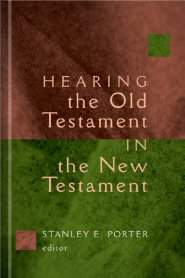
Recently, I have been spiritually growing through the men's study at my church. We started our lesson with the beginning of Jesus' life. Here are some observations from the NT texts presented in the inductive study Lesson 1 at Men of Valor. The five texts included the birth and child narratives of Jesus: Matthew 1:18-25; Luke 2:1-20; Matthew 2:1-12; Luke 2:22-24; Luke 2:40-52. I am not going to include all of them, for there is more references in some texts than others, and that would take forever! Therefore, below are just a few notes on some verses that have a huge OT background or reference (this book, Hearing the Old Testament In the New Testament, is outstanding resource by Stanley E. Porter).

Matthew 1:18-25
A. 1:22-23 is a quotation of Isaiah 7:14, "Therefore the Lord himself will give you a sign. Behold, the virgin shall conceive and bear a son, and shall call his name Immanuel."
B. 1:23 ends with an allusion of Isaiah 8:8, 10 ["Immanuel" and "God is with us"]. Matthew applied these Scriptures to the fulfillment of the coming of Jesus.

Luke 2:1-20
A. 2:9 begins the narrative by (also cf. Matt. 1:20) mentioning the "angel of the Lord." (appears throughout the OT to authenticate a messenger of God; a theophany, especially in relation to Gen. 16:7-11; 22:11, 15; Ex. 3:2; Num. 22:22-35; Jug. 2:1, 4; 5:23; 6:11-22; 13:3-21; 1 Kings 19:7; 2 Kings 1:3, 5; Zech. 12:8).

B. 2:9 describes the glory of the Lord shone around the shepherds just as it did in the OT to confirm the presence of Yahweh. These texts are explicit allusions: Ex. 16 (Pillar Cloud), 24 (Mount Sinai), 40 (Tabernacle); Lev. 9:6, 23 (Priesthood); Ezekiel 43:4-5 (Temple); Isa. 40:5 (Messiah); John 1:14 (Jesus)!

Matthew 2:1-12
A. 2:2 mentions the "star" that revealed the place Jesus was to be born, but there is no OT references that indicate it was prophesied by God (Jesus is called the bright morning star, cf. Rev. 22:16?)

B. 2:5-6 is a quotation of Micah 5:2 to prophesy where Jesus the Messiah was going to born, "But you, O Bethlehem Ephrathah, who are too little to be among the clans of Judah, from you shall come forth for me one who is to be ruler in Israel, whose coming forth is from of old, from ancient days."

Luke 2:40-52
A. 2:40 says Jesus become "strong in spirit," and was "filled with wisdom," and "the grace [favor]of God was upon him." These factors are allusions to the Messiah in Isaiah 11:2, "And the Spirit of the Lord shall rest upon him, the Spirit of wisdom and understanding, the Spirit of counsel and might, the Spirit of knowledge and the fear of the Lord." (cf. Isa. 42:1; 61:1-3; Luke 4:16-21)

I love studying the OT background of the NT because it highlights and reveals the original purpose of the text. Studying Jesus and the OT fulfillments of his coming in the gospels has made me appreciate this statement in our lesson notes. I came across a verse that encouraged me to study and get in God's Word. Isaiah 34:16 begins with an exhortation, "Seek and read from the book of the Lord!" Therefore, I thought this was a good quote from our study which was relevant to the visible life of Jesus: "God wants us to see him for ourselves [primarily in his Word]. He wants us to be touched by his glory; to witness his majesty; to know him as a friend."

"Whoever says he abides in him ought to walk in the same way in which he walked."
(1 John 2:6)

What is your favorite subject in Christian Studies?